
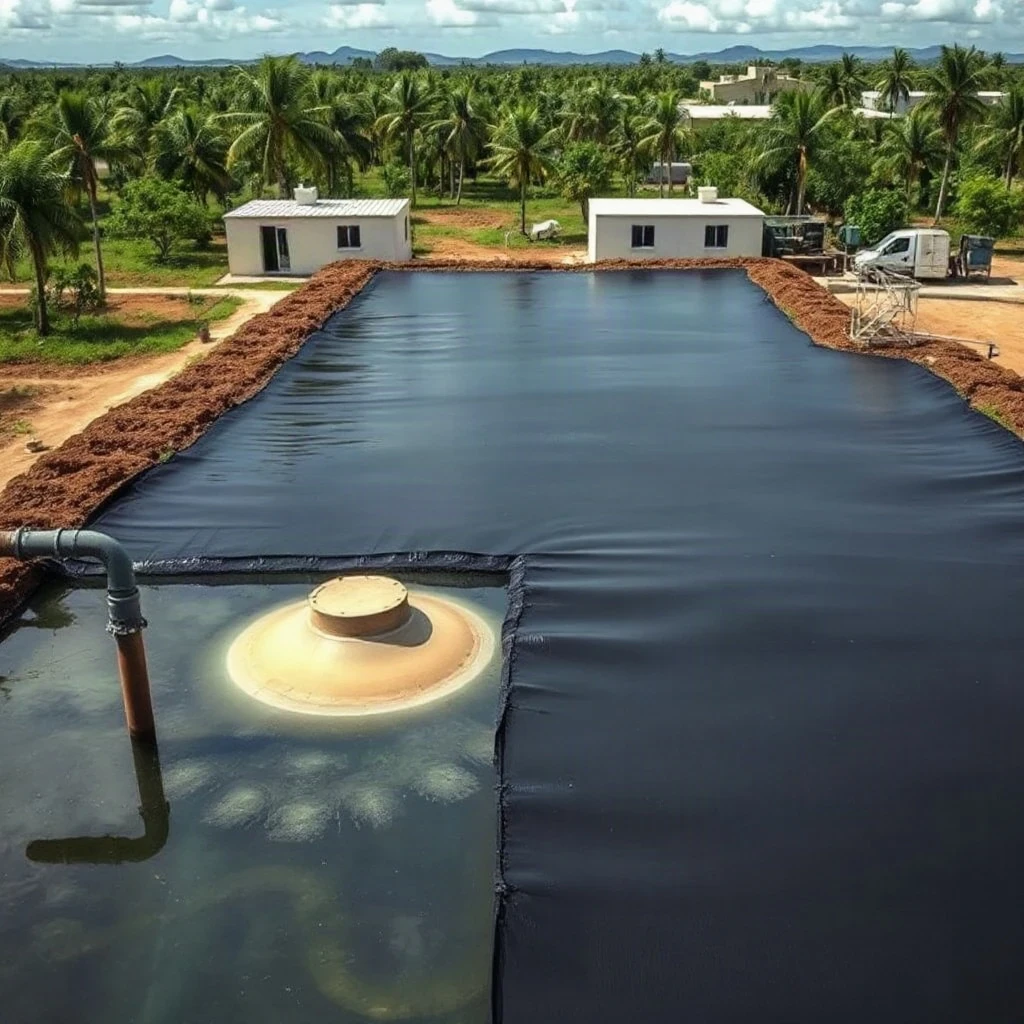
Palm oil mill effluent (POME) is a high-strength organic wastewater generated in large volumes during milling. Left untreated in open ponds, it decomposes anaerobically and releases methane, a greenhouse gas with a warming potential many times that of carbon dioxide over a 20-year horizon. Methane avoidance is therefore the central climate argument for capturing biogas from POME.
The research base on POME treatment is substantial but uneven. It is well established that covered anaerobic digestion — typically in closed tanks or lagoon covers — can capture a large share of the biogas that would otherwise escape from open ponds. Capture rates reported in the literature vary widely, from modest fractions to near-complete collection, depending on system design, maintenance and climate. That variability is itself a key finding: the technology works, but performance is site-specific.
What is well established is that methane avoidance is real. Studies consistently show that replacing open anaerobic ponds with covered systems or closed digesters reduces methane emissions per tonne of fresh fruit bunch processed. The magnitude of reduction, however, is not a single number. It depends on the organic load of the effluent, the retention time, temperature, and whether the captured biogas is flared, used for heat or power, or upgraded to biomethane. Flaring converts methane to carbon dioxide, which lowers the warming impact but does not eliminate it. Combustion for energy displaces fossil fuels, adding an offset benefit that is often counted separately.
Where the evidence becomes contested is in lifecycle accounting. Some industry analyses assume high capture efficiencies and full utilisation of biogas, yielding large net emission reductions. Independent reviews tend to be more cautious, pointing to operational realities: leaky covers, incomplete mixing, downtime, and the fact that not all mills run digesters year-round. Methane that slips past a cover is still emitted, and some studies suggest that real-world capture is often below design specifications.
Another contested area is the fate of the treated effluent. After anaerobic digestion, POME still contains organic matter and nutrients. If discharged to water bodies, it can cause oxygen depletion and eutrophication. Research on post-treatment — aerobic polishing, composting, or land application — is less mature than the biogas literature. The climate benefit of methane capture can be partially offset by other environmental impacts if the treated water is not managed properly.
There is also ongoing debate about the baseline. Some argue the relevant comparison is not open ponds but the full range of alternative disposal options, including direct land application or co-treatment with other wastes. Depending on the baseline chosen, the net benefit of biogas capture can look larger or smaller. This is not a flaw in the research but a reminder that emission reduction claims are only meaningful relative to a clearly defined counterfactual.
For producers, the practical implication is that biogas capture is a credible, evidence-backed mitigation option, but one whose real-world performance must be verified. Mills should measure methane emissions directly rather than rely on design assumptions. Regular maintenance of covers and gas collection systems is critical; a cover that leaks defeats the purpose. For refiners and buyers, the lesson is to ask for evidence — actual monitoring data, not just engineering estimates — when assessing the climate credentials of certified sustainable palm oil. The research supports optimism about the potential, but it does not support the assumption that every covered pond delivers the same reduction.
In short, the state of research is clear on the direction of the effect and less clear on the magnitude. Methane avoidance from POME is real and significant, but the size of the benefit is contingent on operational discipline and honest accounting. Until more field-level data is published from operating mills, the prudent reading is that biogas capture is a necessary but not sufficient condition for a low-emission palm oil supply chain. ---
*This article reflects the position as of 3 August 2026. Research moves on, and later work may revise or supersede what is described here. Please verify the current position, and any changes made after this date, before relying on it.*